Nutraceutical Industry Challenges in 2026: How Paytriot Payments Can Help Businesses Stay Competitive

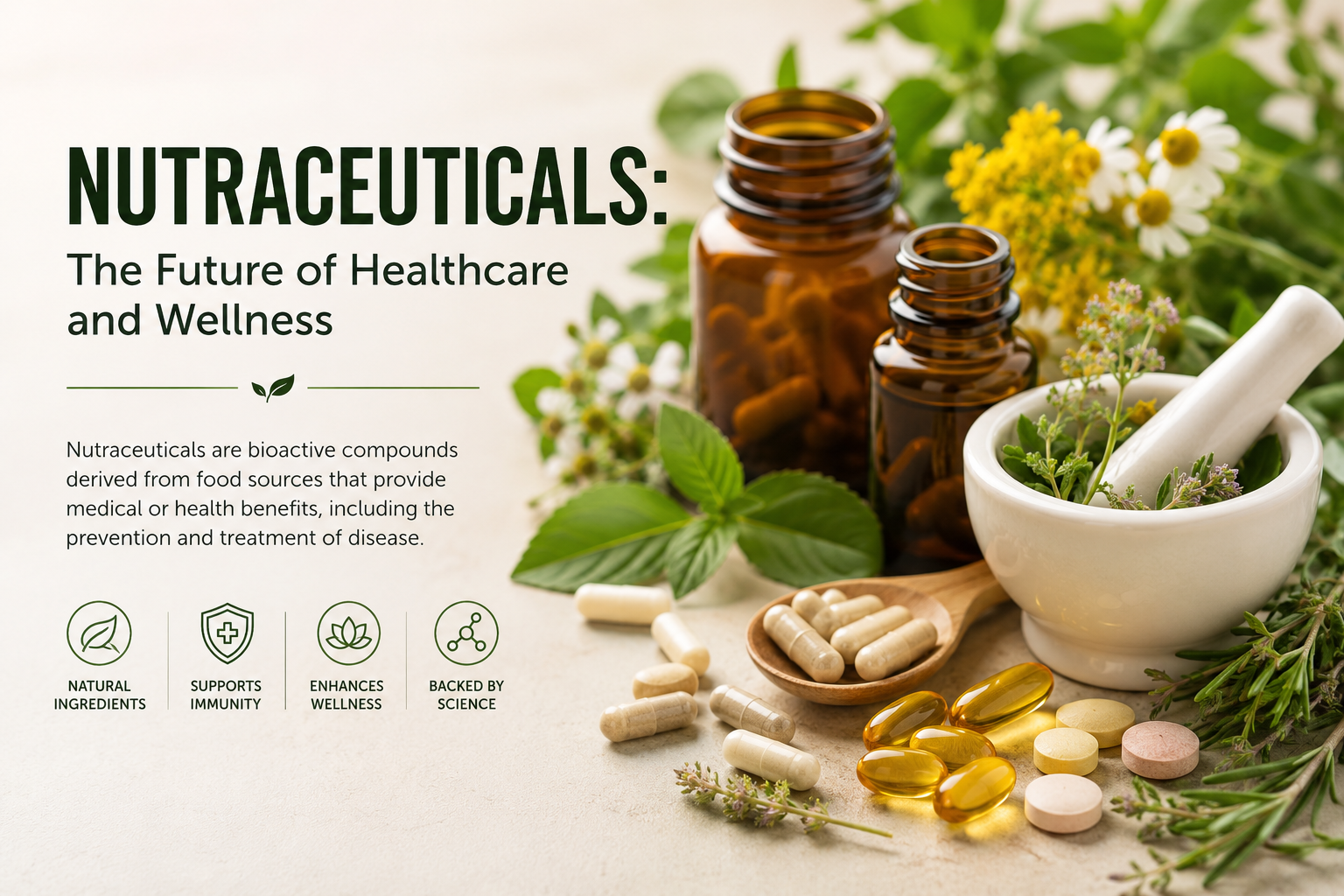
The nutraceutical market in the UK and all across Europe is now larger than ever and has become more challenging to compete in than at any other time in history.
The market of vitamins, functional foods, sports nutrition, nootropics, and tailored nutrition has transformed from a fringe health shop industry into a mainstream wellness expenditure, driven by the aging population and shift in consumer preference toward preventive health and innovation in AI-driven discovery and formulation of products.
However, growth has not made the UK/EU market any simpler to manage. In fact, 2026 could widen the divide. Some will grow well. Others will keep battling issues. These come from post-Brexit rules. They also come from tighter regulation across Europe. The payments environment may assume nutraceutical companies are guilty until proven innocent.
For entrepreneurs and their finance departments in both Britain and Europe, it has become critical to be aware of these challenges and know where to go for help.
Britain and the EU have since gone their separate ways with regards to regulation and the differences between them only increasing.
Post-Brexit, Great Britain has adopted the basic framework set by the Food Supplements Directive from the old EU regulations but has established its own distinct system where the Food Standards Agency (FSA) takes charge of post-market controls without any pre-market authorizations, and where its Nutrition and Health Claims Committee (NHCC) runs its own claims register, which has started to deviate from the list compiled by EFSA in the EU.
At the same time, Northern Ireland still follows EU rules under the Windsor Framework. Thus, for products that target the whole of the UK, as well as the EU markets, a single brand in Britain may face three different systems of regulation.
Decisions concerning borderline-product classification
Changes made by the MHRA in its October 2025 borderline-products guidance have tightened the criteria. These criteria decide if a dietary supplement is medicinal. The decision depends on its claims or mode of action.
This creates a real threat for brands. It affects marketing that even hints at preventing or treating disease. Classification is critical, as a product may be withdrawn if its classification is deemed to be incorrect.
Enforcement in the EU for health claims is increasing.
The Court of Justice of the European Union’s 2025 ruling in the Novel Nutriology case reaffirmed this point. Health claims about botanical substances are not allowed in ads. This ban remains until the European Commission completes its evaluation. That review has been ongoing for years. No clear result is in sight. Added to this are the plans of the European Commission to unify maximum levels of vitamins and minerals in the EU in 2026.
Cross-border trading tensions in Europe still remain a challenge.
The customs clearance process after Brexit makes UK-EU trade more expensive. Country-specific labeling adds extra costs. Keeping separate compliance dossiers for Great Britain (GB) and the EU also increases costs.
They also make trading between UK-based and European customers more time-consuming.
Payment processing is one of the main operational issues for most nutraceutical business owners, and 2026 adds another element to the equation.
Typically, mainstream processors and payment facilitators regard nutraceuticals and supplements as restricted and high-risk categories and usually open accounts of such businesses immediately but then freeze, limit, or terminate them after some period due to automated risk classification systems.
In addition, the new PSD3 and Payment Services Regulation (PSR) coming into effect from 2026 to 2027 in the EU and continuing the UK's parallel system (APP fraud reimbursements, for example) will increase the regulation regarding strong customer authentication, liability in cases of fraud, and safeguards for the payment providers.
It is exactly this sort of challenge for which Paytriot Payments was designed.
Paytriot is a UK-based payments company. It is FCA-regulated. It also has direct access to Visa and MasterCard.
Paytriot offers merchant services for businesses that regular processors often avoid. This is especially true in the UK and EU. These businesses include nutraceuticals and supplements.
In-house underwriting means quicker and more realistic decision-making.
Since Paytriot reviews each application in-house, it does not send it to third-party risk committees. Nutraceutical merchants often get a decision within hours or days. They avoid the weeks of waiting common with UK and European banks. Paytriot bases the decision on each business’s details. It does not label the business as “high-risk” by default.
Stability is the key in place of vulnerability.
With payment processors able to freeze or cancel a merchant's account at will when they hit certain volumes or categories of transactions to undergo automatic review, Paytriot merchant accounts are designed for stability, based on the merchant's needs instead of anonymity in a collective master account.
Gateway providers who are PCI-DSS level 1 compliant and have fraud detection systems are able to reduce any possible chargeback risks from the very beginning.
The card terminals and Internet payment checkout systems have been engineered to include fraud detection systems, which can identify any type of fraud that is prevalent in nutraceutical disputes, including stolen card fraud, friendly fraud, and bot test transactions before they escalate into chargebacks in light of increasing UK and EU authentications within the PSD3 structure.
Multi-currency is easy with Paytriot to support expansion in the UK and EU.
Nutraceuticals that trade in Great Britain, Northern Ireland, and the broader European Union don't have to worry about building out their checkout infrastructure with multi-currency support and processing options such as Apple Pay and Google Pay in GBP and EUR, among others.
Flexible commercial terms are designed with flexibility in mind. Nutraceutical merchants do not need to sign annual contracts. They can choose rolling 30-day contracts.
The company offers competitive monthly fees. It also requires a minimum three-day settlement period. These are common issues with offshore high-risk providers or aggregators.
Nutraceutical merchants get a custom account team to handle their needs. The company does not force merchants to navigate a standard support system but gets access to experts on how to manage chargebacks, regulatory requirements for documentation that the regulators in the UK and EU demand, and, more specifically, how the nutraceutical industry is viewed on both sides of the Channel.
Ready to accept Crypto Payments?
Join thousands of UK and European merchants using Paytriot to power their online checkouts. Get set up with a merchant account in 24 hours.
Get Started Now