Originally published on payatlas.com
The Future of CBD, Understanding the Industry's Complexities & How Paytriot Keeps You Ahead

Introduction
The CBD industry is at a crossroads. On one hand, it presents an unprecedented business opportunity with a projected market size of over $47 billion by 2028. The growth is fueled by increasing consumer demand for natural wellness products. On the other hand, it is marred by an array of regulatory tangles, financial exclusion, banking discrimination, and operational complexity. These challenges have caused many businesses to fail before they reach their true potential.
It is not an easy industry to operate in. The CBD industry intersects with healthcare, agriculture, retail, financial services, and law. Each of these industries has its own set of rules, gatekeepers, and standards. To be successful in this industry, CBD business owners need to not only develop excellent products but also operate in an industry where, in many ways, they were not meant to be.
This article is an in-depth look at the CBD industry, what it is, what makes it so uniquely complex, and how Paytriot can help businesses successfully operate in this industry.
The Science of the Compound
CBD, is a compound found in the sativa plant. It is just one of over 100 different parts and works in tandem with the system in the human body. This is a complex system of neurotransmitters receptors.
While other CBD like THC (tetrahydrocannabinol) interact with the brain's receptors and get the user "high," CBD does not interact with the brain's CBD receptors in the same way. It does not get the user "high."
This is the reason that CBD is now considered legal in most of the Western world and is the reason that it has been so well-accepted by the consumer market in such a short period of time.
While the true therapeutic value of CBD is still being studied and researched, there is evidence of the compound being effective in the following areas:
* Chronic pain management
* Anxiety and stress relief
* Sleep disorder relief
* Epilepsy
* Inflammatory conditions such as arthritis
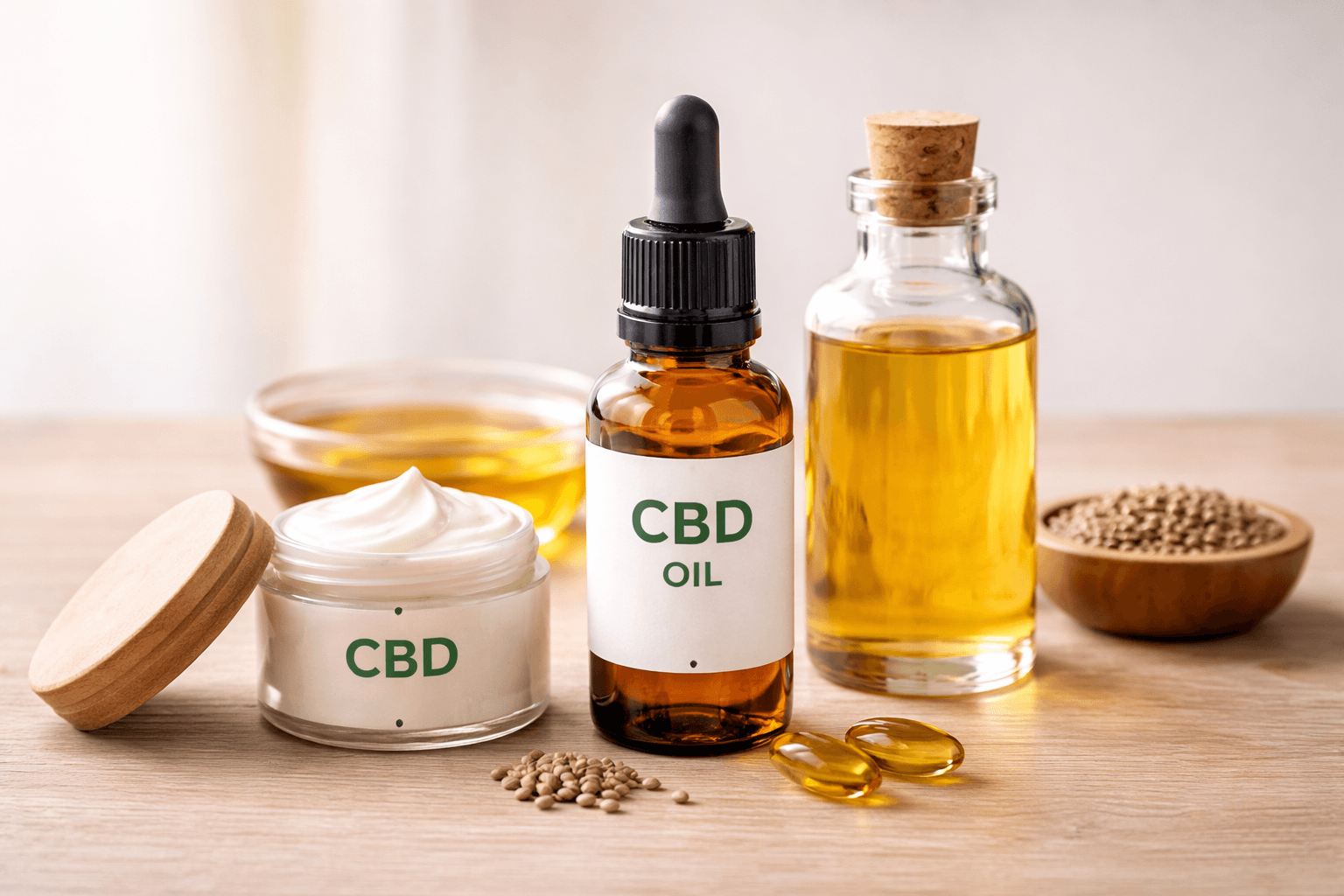
CBD is no longer just one product. It has evolved into an entire spectrum of delivery formats, each with its own manufacturing standards, regulatory issues, and consumer base:
Ingestible Products - Oils and tinctures, capsules and softgels, edibles such as gummies, chocolates, and drinks, and water-soluble CBD products for quicker bioavailability.
Topical Products - Creams, balms, salves, transdermal patches, and topical skincare and beauty products, which are one of the fastest-growing categories in the market.
Inhalable Products- Vape products and CBD flower, which have the highest level of regulatory hurdles to overcome, especially regarding lung safety and the safety of the delivery system itself.
Specialist and Emerging Products Pet products, suppositories, nasal sprays, and pharmaceutical-grade CBD for specific medical conditions.
Each one has its own set of regulations, so for a company to be in both the oil and vape space, it has to deal with multiple regulatory environments.
Now, that is where the story starts to get a great deal more complicated. It's not just that the CBD industry is a new industry and that new industries are inherently complicated. It's that the CBD industry is a new industry in a world where existing legal, financial, and business infrastructures were never designed to accommodate it.
1. Regulatory Fragmentation Across Markets
One of the greatest complexities that the CBD industry faces is the total lack of regulatory consistency not just between countries, but even within countries.
In the United Kingdom, CBD products are legal if they are used as food supplements, so long as they contain no more than 1 mg of THC per product container and are derived from approved hemp cultivars. However, the Food Standards Agency (FSA) has also validated a new legal requirement for the authorization of CBD products as novel food products in 2021, which means that all CBD products that are ingested must be listed on the FSA's public list of authorized novel food applications in the UK or be removed from the shelves. This requires extensive safety dossiers, toxicological studies, and in many cases, clinical evidence.
In the European Union, the situation is even more fragmented. For instance, in 2020, the European Court of Justice ruled that CBD derived from the whole hemp plant could not be classified as a narcotic under EU legislation. This was a landmark ruling that opened the door for wider market access.
However, it is worth noting that each member state has its own regulations, and a product that is allowed in one country may be restricted in another. Therefore, a brand that wishes to enter the European market has to undertake a series of regulatory assessments.
2. Health Claims Restrictions and Marketing Compliance
One of the most difficult aspects of running a CBD business is the heavy restriction placed on health claims. In the UK and EU, CBD products that are sold as food supplements cannot claim that they can cure or prevent any medical condition. This is heavily monitored by the Advertising Standards Authority (ASA) in the UK and by similar organisations across Europe.
There is a marketing dilemma at play when consumers are buying a product like CBD oil because they have read that it can help with anxiety, pain, or sleep. However, if a company wants to comply with these rules and not face action by organisations like the ASA, it requires a high level of marketing sophistication that can engage consumers and tell them about the system and how it relates to wellness.
The implications of this being wrong go beyond monetary fines. Social media sites like Facebook, Instagram, and Google have traditionally taken a blanket approach to advertising CBD products. This means that paid acquisition channels are either not available or heavily restricted.
CBD businesses have had to think about ways to develop better-than-average organic content strategies, influencer partnerships, and email marketing campaigns because the usual advertising route is not available.
3. Banking and Financial Exclusion
This is arguably one of the most operationally damaging complexities that the CBD sector currently has to deal with. Even in jurisdictions where CBD is legal, such as in the UK and US, the vast majority of high-street banks and conventional financial organizations continue to refuse to bank CBD businesses or, in many instances, terminate existing relationships without notice.
While this is partly due to institutional risk aversion, where financial organizations, in this case, banks, operate in a variety of jurisdictions and are naturally wary of potential regulatory fallout in jurisdictions where CBD is, in fact, a controlled substance, it is also partly a legacy issue of the traditional reputational linkage that has long been drawn between cannabis and illegality.
Legitimately operating, fully compliant CBD businesses are increasingly unable to establish business bank accounts, gain access to business loans and credit facilities, or even make card payments through high-street banks without severe vetting and punitive terms.
4. Payment Processing: The Hidden Barrier to Scale
Payment processing is closely related to banking exclusion, and it is a barrier that has a direct and immediate impact on revenue on a daily basis. For a CBD business that is unable to gain access to traditional payment processing, the effects are direct and immediate.
These include higher transactional fees, issues related to the stability of payment gateways, sudden account terminations that can leave a business without the ability to accept card payments, difficulties in integrating with traditional online platforms, and a lack of solutions for managing chargeback issues.
Chargeback issues, in particular, are a significant problem for CBD businesses. As a sector, CBD is characterized by first-time customers who may be unfamiliar with what they are purchasing, how to use it, and what to expect.
As a result, a subscription billing model is common in this space, and this, in turn, creates a situation in which a high rate of chargeback disputes can be a significant issue. For a business without professional chargeback management solutions, a high rate of dispute can lead to account termination, creating a situation in which it is very difficult to find a traditional payment processor.
Ready to accept Crypto Payments?
Join thousands of UK and European merchants using Paytriot to power their online checkouts. Get set up with a merchant account in 24 hours.
Get Started Now